

Choosing acreage and region
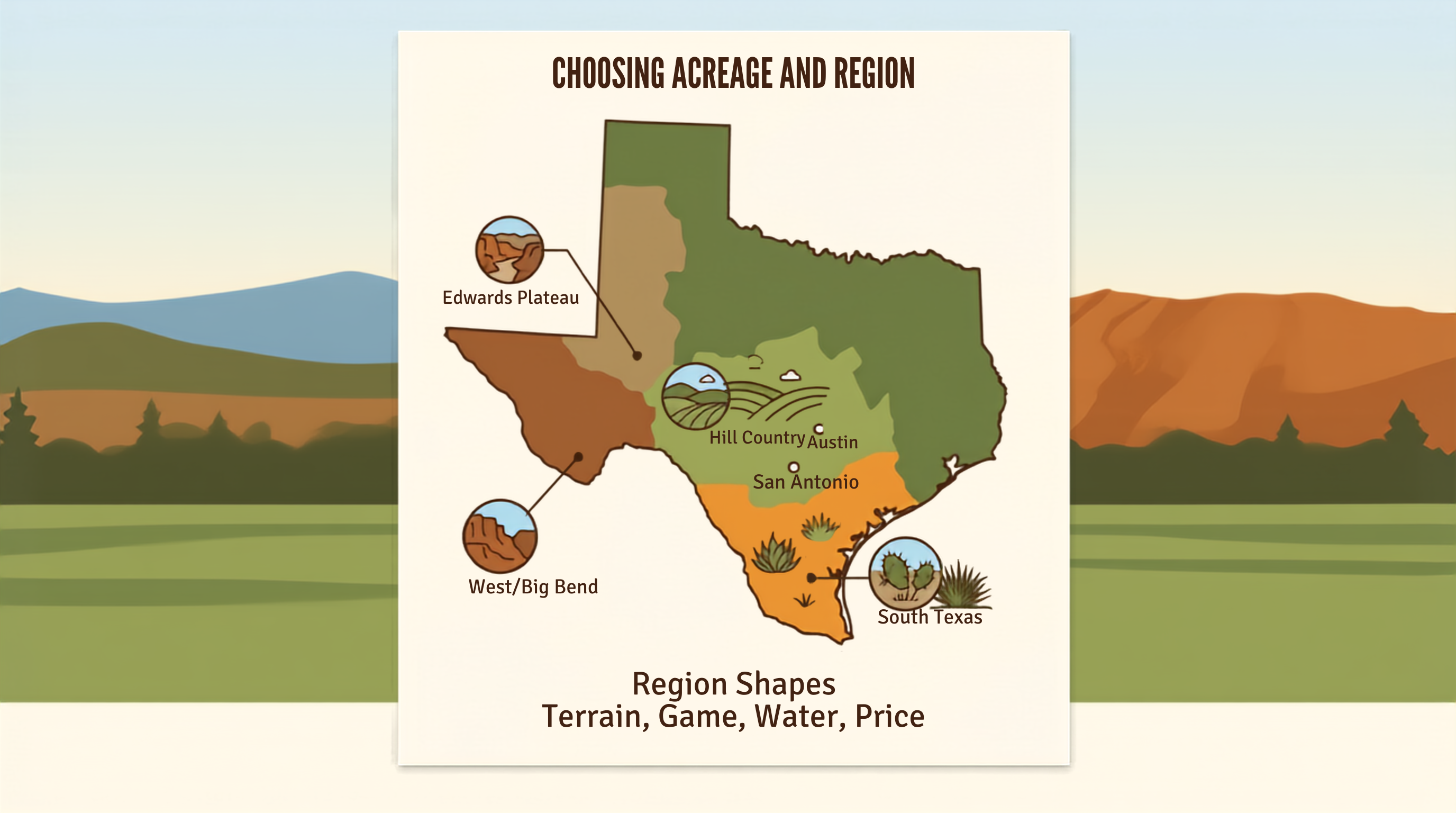 Your first decision is where in Texas you want to be, because the region shapes almost everything else — terrain, game, water, and price per acre. The Hill Country, on the eastern Edwards Plateau, is rolling limestone country within easy reach of San Antonio and Austin. The wider Edwards Plateau to the west is more open and rugged, with larger tracts and a more remote feel. South Texas brush country is famous for its deer hunting and its distinctive thorn-scrub landscape.
How much acreage you need depends on how you plan to use the land and what you intend to hunt. A weekend dove or deer tract has different requirements than a property you want to manage for wildlife over time. There's no single right number, and the practical minimums vary by region and by what you're after, so it's worth talking through your goals before fixing on a size.
Game species to expect
Across most of the Hill Country and Edwards Plateau you can expect native whitetail deer and Rio Grande turkey, along with dove and feral hogs. Free-ranging axis deer and other exotics are well established in parts of the Hill Country and can often be hunted year-round on private land with a license and landowner permission — though the rules and seasons are worth confirming.
Farther west, in the rougher country toward the Pecos and Big Bend regions, aoudad (a free-ranging exotic sheep) are a notable draw. South Texas is best known for its whitetail. Which species are actually present comes down to the individual tract and its surroundings, so treat regional generalizations as a starting point and ask about the specific property.
Access and surveys
Knowing exactly what you're buying — and how you'll get to it — is fundamental on rural land. Every tract we sell is surveyed, so the boundary and acreage are defined on paper before you buy rather than estimated. A current survey also helps you understand fence lines, corners, and where any improvements sit.
Just as important is legal access. Our tracts are sold with deeded access on graded ranch roads, which means your right to reach the property is written into the deed rather than depending on a neighbor's goodwill. When you look at any rural tract — ours or anyone's — confirm that access is deeded and ask how the road is maintained.
Water
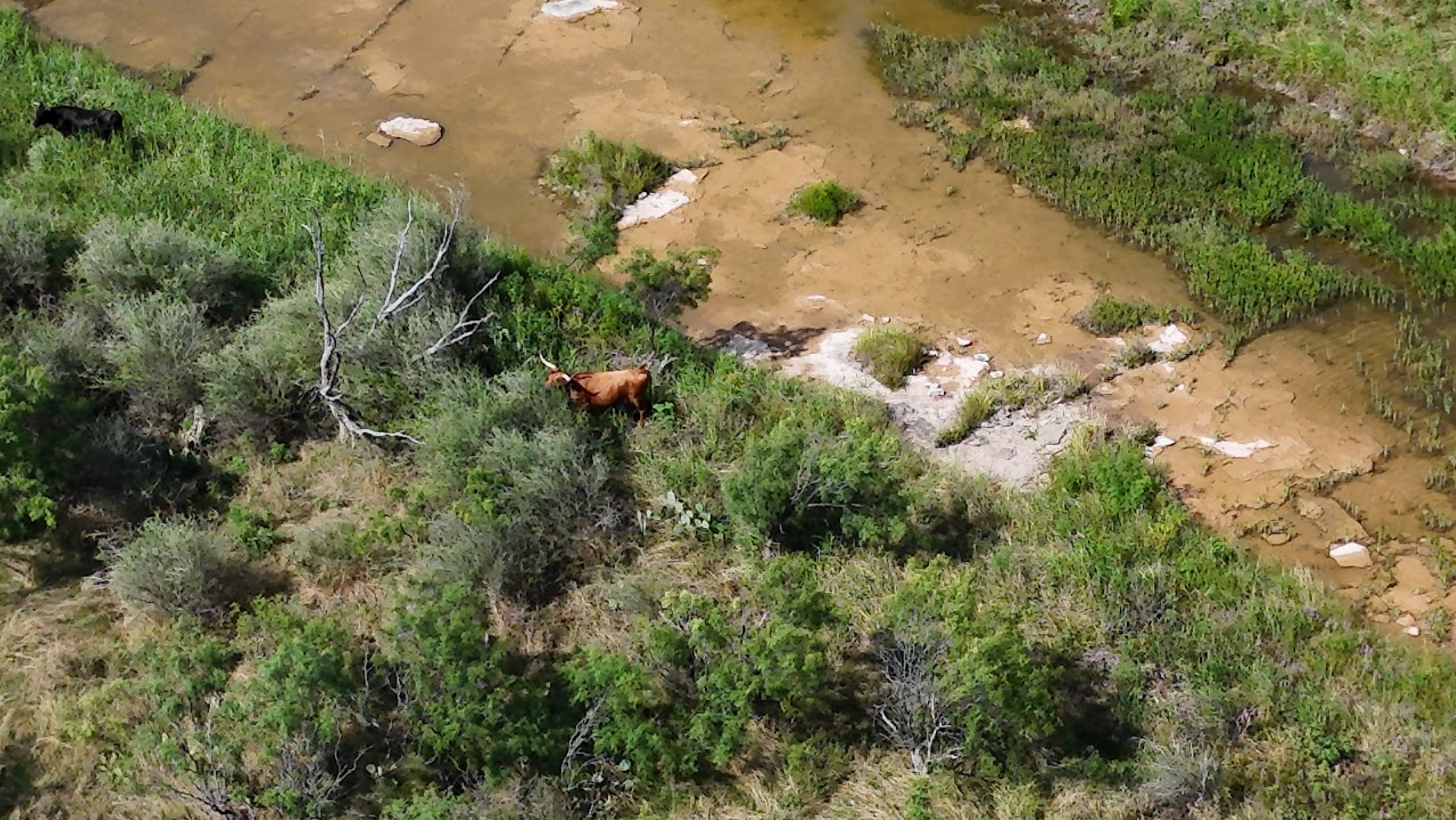 Water is one of the biggest practical questions on a hunting tract, and the answer varies a great deal by area. In much of the Hill Country and Edwards Plateau, rural water comes from wells drawing on aquifers such as the Edwards and the Edwards–Trinity, but well depth, yield, and water quality differ from place to place and even from tract to tract.
Some properties have surface water — a creek, stock tank, or seasonal drainage — while others rely entirely on a well or hauled water. Because this is so site-specific, don't assume; ask what water exists on a given tract and what neighboring wells in the area typically produce. Local groundwater conservation districts can also be a useful source on well permitting in their area.
Wildlife and agricultural tax valuation basics
Texas allows qualifying rural land to be appraised on its productive value rather than its market value, which can meaningfully lower the annual property tax. The two common paths are agricultural-use valuation (often called "ag exemption," though it's technically a special valuation) and wildlife-management valuation, which lets owners maintain a special valuation by carrying out qualifying wildlife practices instead of traditional ag use.
The exact requirements, history needed, and qualifying activities are set and administered at the county level, and they vary. Before you count on any tax treatment for a tract, confirm the current valuation and what it would take to keep or establish it with the local county appraisal district. We're glad to share what we know about a tract, but the appraisal district is the authority on its valuation.