
Access and road maintenance
On raw land, the first practical question is how you'll actually reach it. The strongest arrangement is deeded access — your legal right to reach the property written into the deed — ideally over a graded ranch road that's been shaped and maintained for vehicle travel. The weaker alternative is an easement, a granted right to cross someone else's land, which can work but depends entirely on how it's written and maintained. A tract with no legal access at all is a serious problem to avoid.
Just as important as the right of access is who keeps the road usable. On rural roads, maintenance can fall to the county, to a road association, to the owners who share it, or to the individual landowner, and that arrangement varies by tract and area. Every tract we sell is surveyed with deeded access on graded ranch roads, so the access itself is never in question — but on any rural land, ours or anyone's, ask specifically how the road is maintained and by whom.
Fencing and Texas open-range nuances
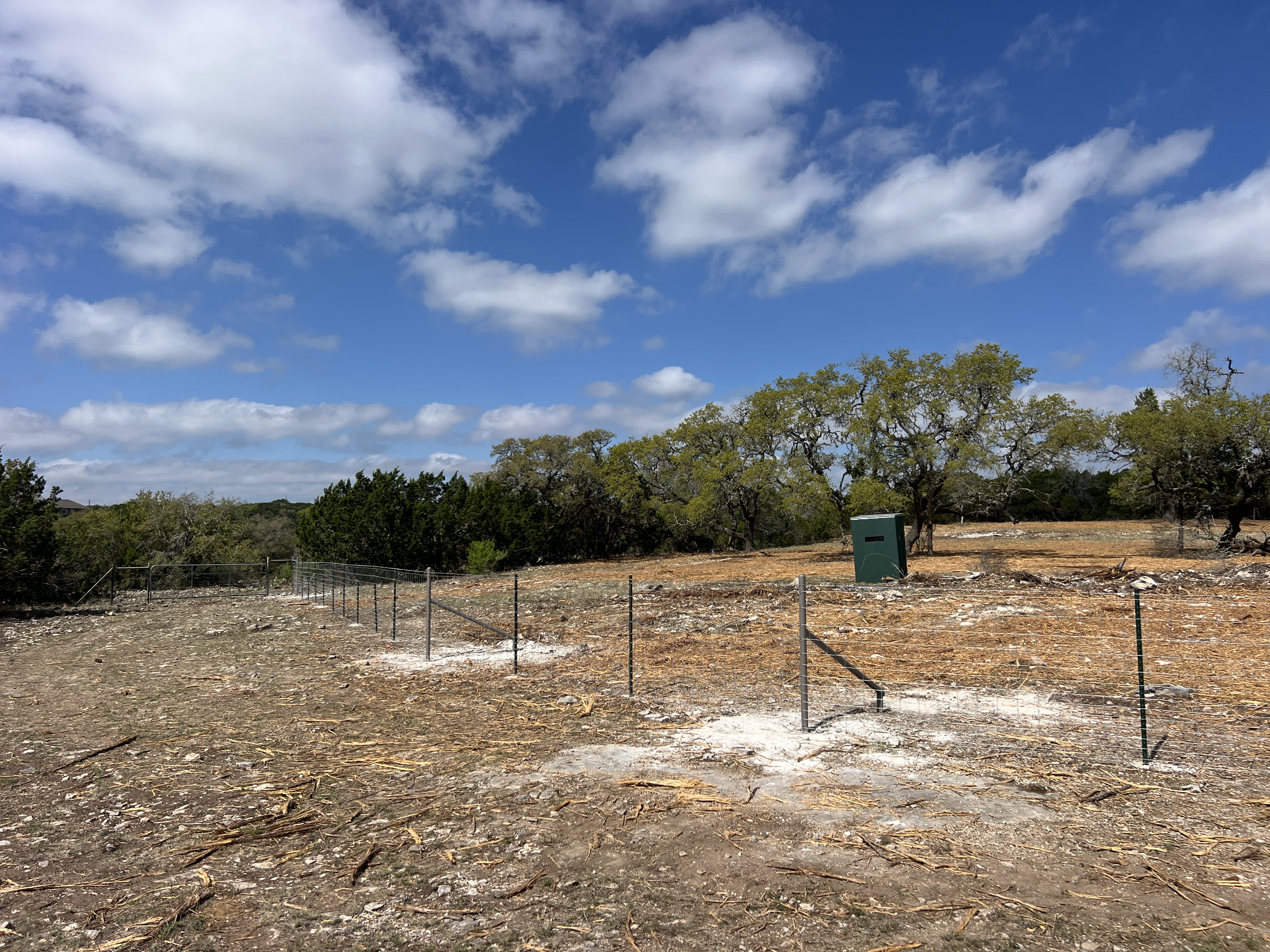
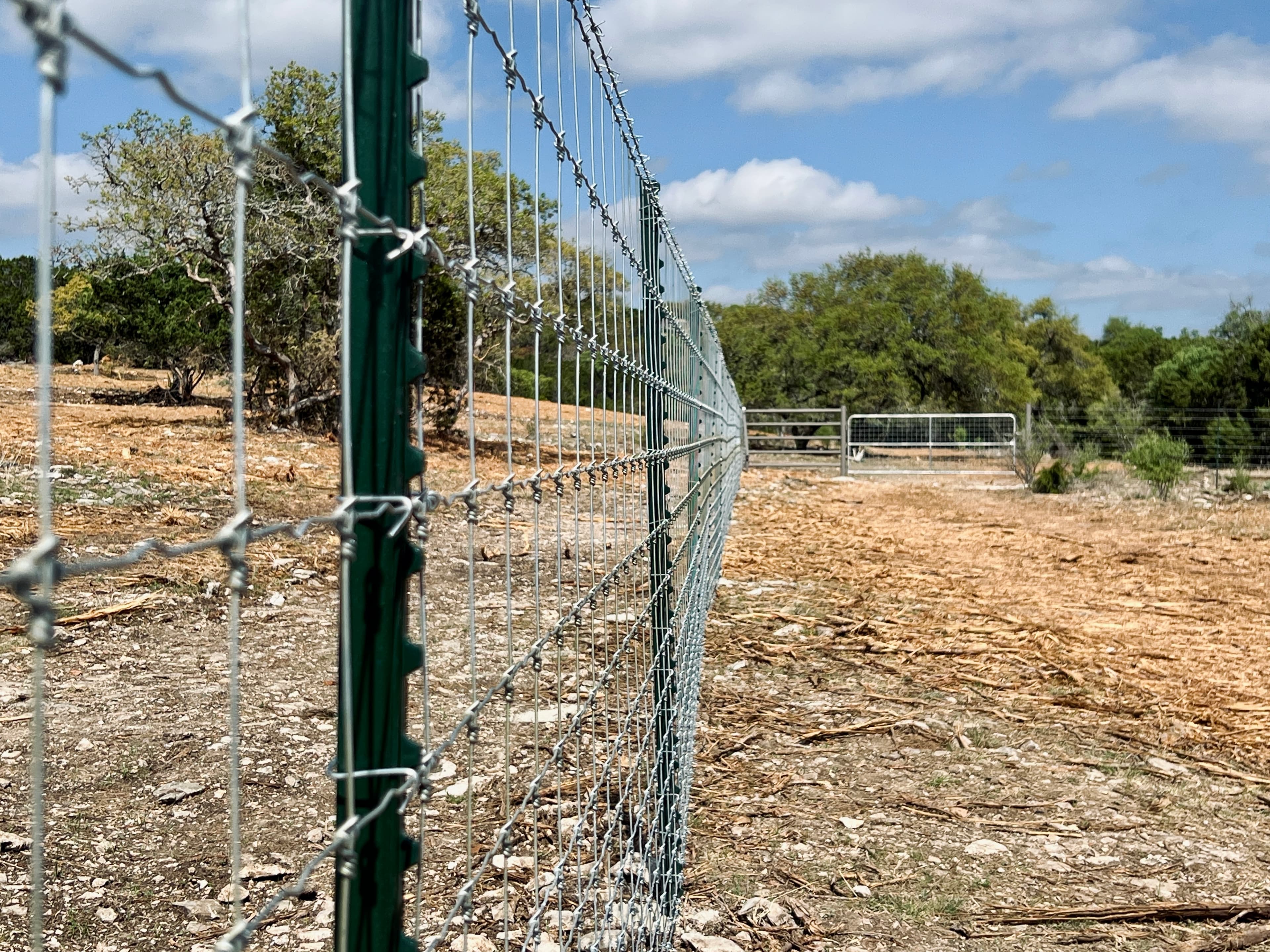
Fencing on rural land usually breaks into two jobs: perimeter fencing around the tract's boundary, and cross-fencing that divides the interior into pastures or management units. New owners often want to know what exists, what condition it's in, and what they'd need to add — and that's very tract-specific. A surveyed boundary helps here, because you know exactly where a perimeter fence should run.
Texas also has open-range traditions that affect how livestock and fencing responsibilities are treated, and the rules around livestock at large and shared boundary fences can differ from place to place. Who is responsible for maintaining a fence shared with a neighbor is a common point of confusion, and it isn't uniform statewide. Because these nuances vary, treat the general picture here as background and confirm fencing responsibilities and any local livestock rules locally before you rely on them.
Electric service, or going off-grid
Whether you have practical access to electricity is one of the biggest variables on raw land. On some tracts, electric service is already nearby and a connection is straightforward; on others, the nearest line is far enough away that bringing in service is costly or impractical, and owners choose to go off-grid with solar and battery storage instead. Many recreational and remote tracts fall into that second category.
Neither approach is right or wrong — it depends on how you intend to use the land and how remote the tract is. What matters is finding out early. Whether utility power is available, and what it would take to reach a building site, is something that varies by tract, so ask us about the specific property and don't assume a line is closer than it is.
Water and wastewater
On most rural tracts, water comes from a well drilled into the local aquifer, and wastewater is handled on-site with a septic system rather than a municipal sewer. Both are normal parts of rural land, but both are site-specific: well depth, yield, and water quality differ from place to place and even from tract to tract, and septic suitability depends on the soils and the site.
Wells in Texas are commonly overseen by a local groundwater conservation district, which can handle matters such as well permitting and spacing in its area. Because so much of this is local, don't assume — ask what water already exists on a given tract, what neighboring wells typically produce, and confirm well rules with the local groundwater district and any wastewater requirements locally.
The questions to ask before you buy
A short list of questions will tell you most of what you need to know about developing a raw tract. Is access deeded, is the road graded, and who maintains it? What fencing exists, what condition is it in, and who is responsible for any shared boundary fences? Is electric service nearby, or would this be an off-grid property? What's known about water on the tract and on neighboring wells, and is the site suitable for a septic system?
None of these have one-size-fits-all answers, which is the point — they vary by tract and area, and several are best confirmed locally with the county, the local groundwater district, or whoever maintains the road. Every tract we sell is surveyed with deeded access on graded ranch roads and light restrictions, so the foundation is solid; for the rest, ask us about the specific property and we'll tell you what we know and where to verify the rest.