
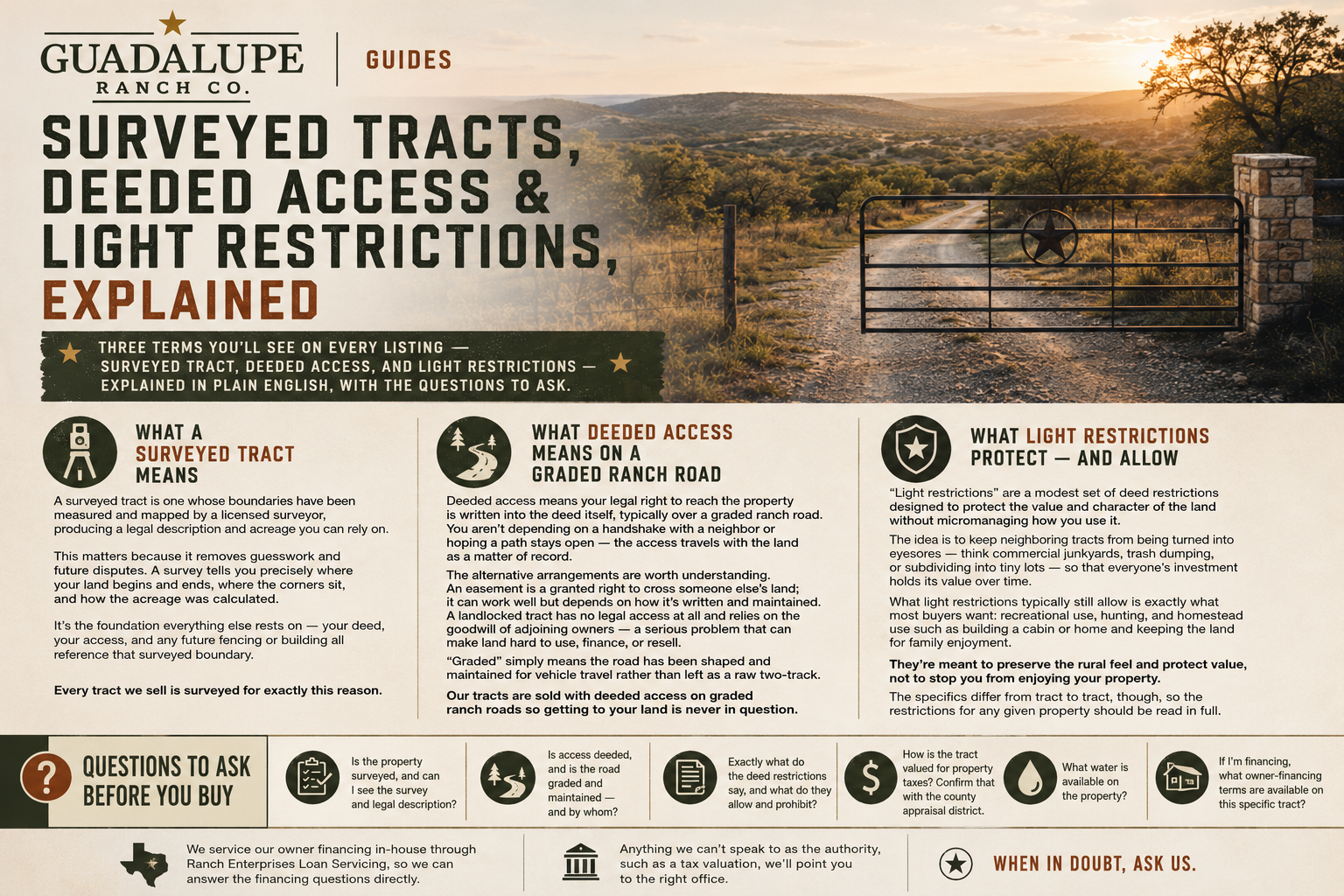
What a surveyed tract means
A surveyed tract is one whose boundaries have been measured and mapped by a licensed surveyor, producing a legal description and acreage you can rely on. Instead of buying "about forty acres somewhere in this pasture," you're buying a defined parcel with established corners, lines, and area.
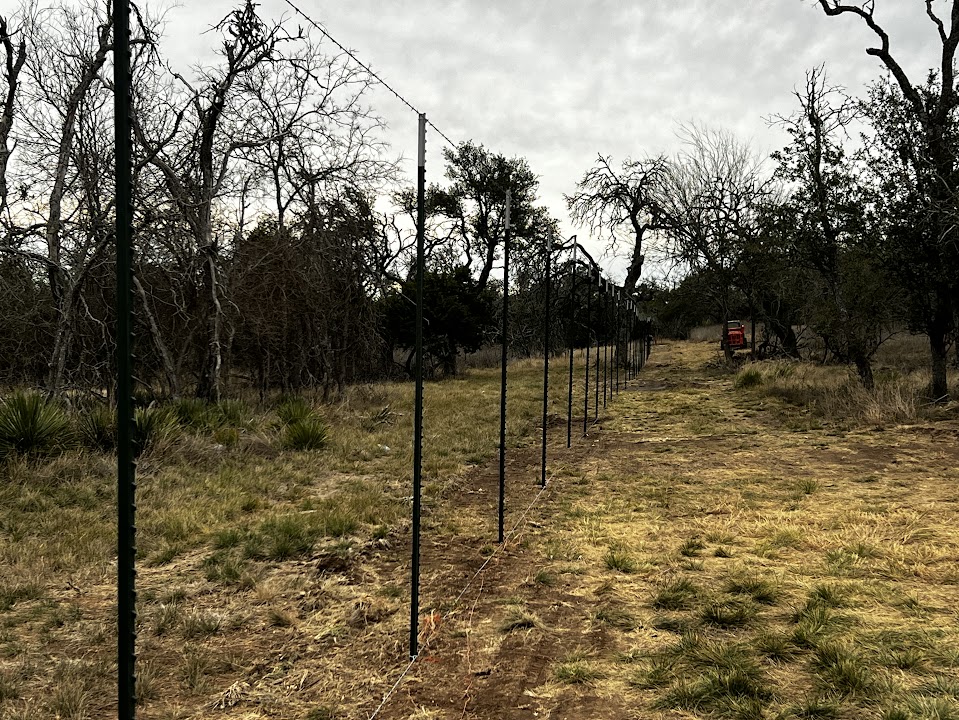
This matters because it removes guesswork and future disputes. A survey tells you precisely where your land begins and ends, where the corners sit, and how the acreage was calculated. It's the foundation everything else rests on — your deed, your access, and any future fencing or building all reference that surveyed boundary. Every tract we sell is surveyed for exactly this reason.
What deeded access means on a graded ranch road
Deeded access means your legal right to reach the property is written into the deed itself, typically over a graded ranch road. You aren't depending on a handshake with a neighbor or hoping a path stays open — the access travels with the land as a matter of record.
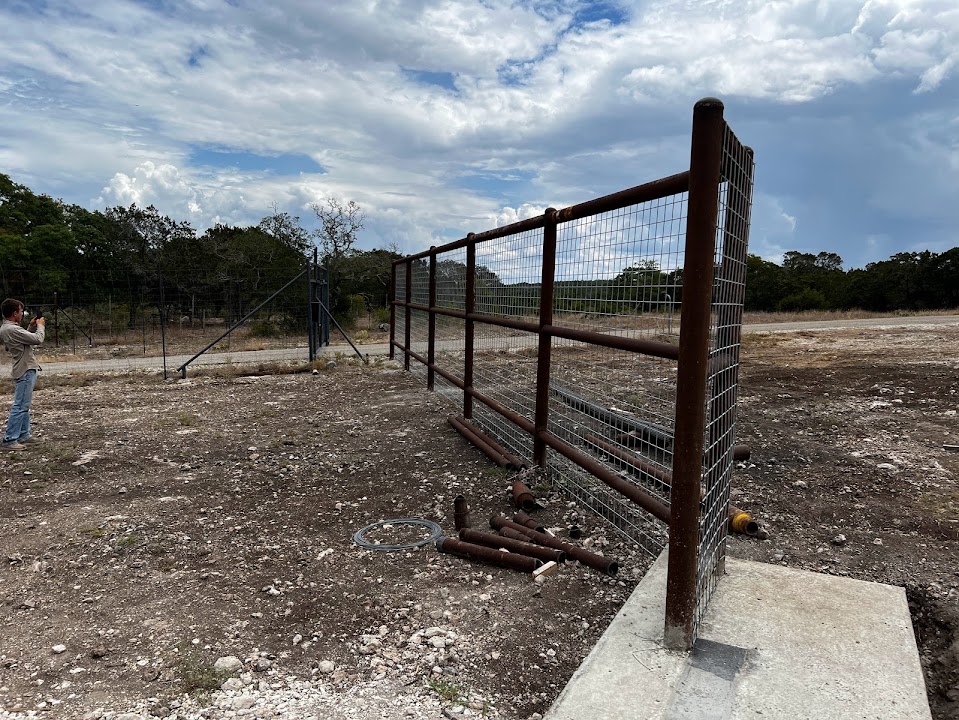
The alternative arrangements are worth understanding. An easement is a granted right to cross someone else's land; it can work well but depends on how it's written and maintained. A landlocked tract has no legal access at all and relies on the goodwill of adjoining owners — a serious problem that can make land hard to use, finance, or resell. "Graded" simply means the road has been shaped and maintained for vehicle travel rather than left as a raw two-track. Our tracts are sold with deeded access on graded ranch roads so getting to your land is never in question.
What light restrictions protect — and allow
"Light restrictions" are a modest set of deed restrictions designed to protect the value and character of the land without micromanaging how you use it. The idea is to keep neighboring tracts from being turned into eyesores — think commercial junkyards, trash dumping, or subdividing into tiny lots — so that everyone's investment holds its value over time.
What light restrictions typically still allow is exactly what most buyers want: recreational use, hunting, and homestead use such as building a cabin or home and keeping the land for family enjoyment. They're meant to preserve the rural feel and protect value, not to stop you from enjoying your property. The specifics differ from tract to tract, though, so the restrictions for any given property should be read in full.
Questions to ask before you buy
A few straightforward questions will tell you most of what you need to know about any rural tract. Is the property surveyed, and can I see the survey and legal description? Is access deeded, and is the road graded and maintained — and by whom? Exactly what do the deed restrictions say, and what do they allow and prohibit?
It's also worth asking how the tract is valued for property taxes and confirming that with the county appraisal district, what water is available, and — if you're financing — what owner-financing terms are available on that specific tract. We service our owner financing in-house through Ranch Enterprises Loan Servicing, so we can answer the financing questions directly. Anything we can't speak to as the authority, such as a tax valuation, we'll point you to the right office. When in doubt, ask us.