The Comanche name was Po-cha-na-quar-hip, and the Texans who could not say it, or would not print its meaning, called him Buffalo Hump. He was a war chief of the Penateka, the Honey Eaters, the southernmost Comanche band and the one that lived closest to the settlements. Everything that happened between Texas and the Comanches from 1840 to 1860 happened to him first.
1840
He was born about 1800 on the Edwards Plateau. In March 1840, at a peace council in San Antonio, Texas soldiers tried to seize the Penateka chiefs who had come to talk, and in the fight that followed killed 35 Comanches in the Council House and the streets. Buffalo Hump was not there. That August he led the answer: somewhere between 400 and 500 warriors, with women and children along, straight down through the settlements to the coast, where they sacked Victoria and then burned the port of Linnville to the ground while its people watched from boats in the bay. It was the largest raid Comanches ever made on a Texas town. On the way home, on August 12, Texas volunteers caught the column at Plum Creek near Lockhart, loaded down with some 3,000 stolen horses and loot, and broke it. Buffalo Hump and most of his men got away.
The treaty years
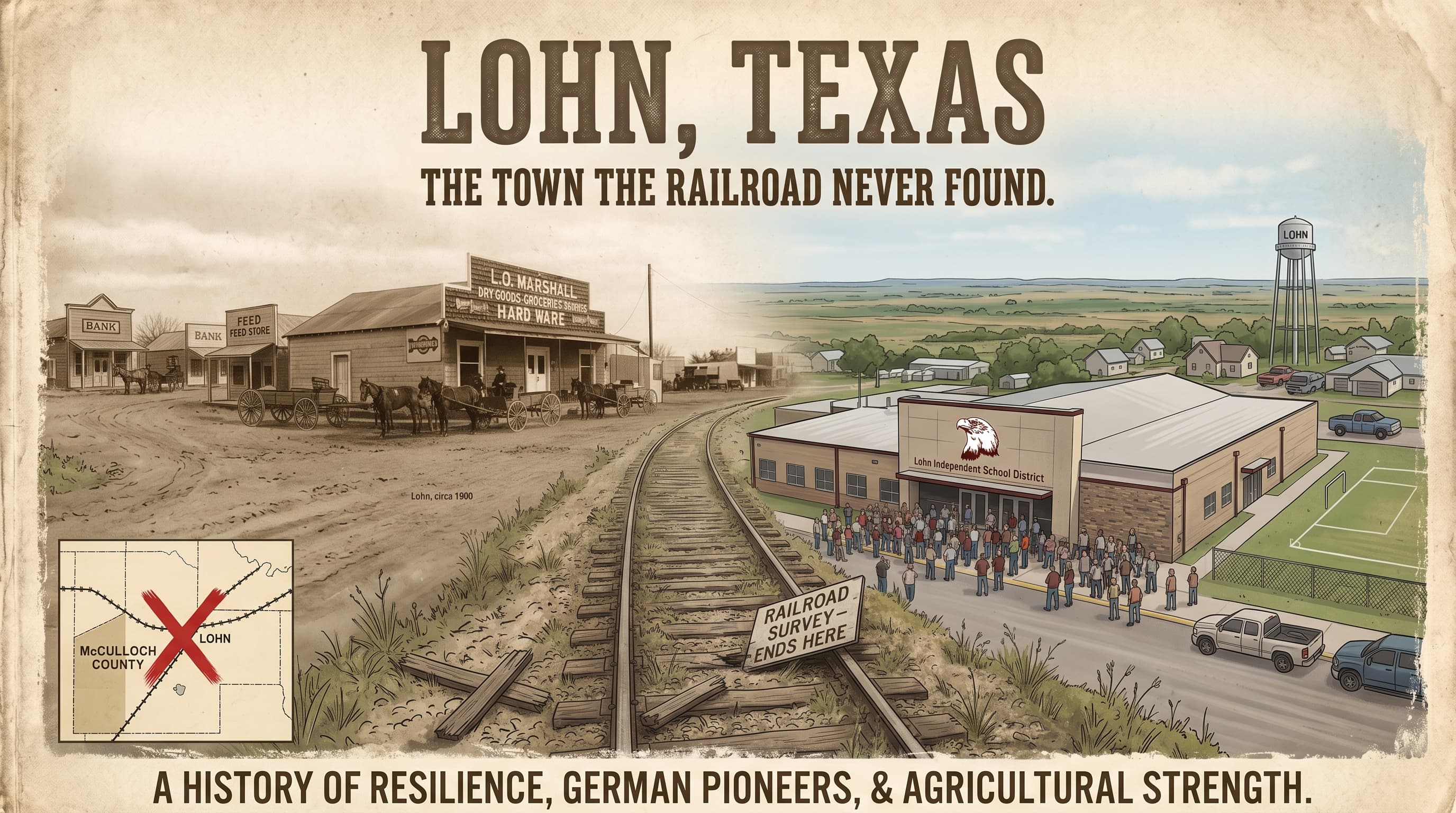
He fought and he talked. In 1844 he met Sam Houston's commissioners at Tehuacana Creek and offered to stop raiding if the Texans would stay off the Edwards Plateau; the Texas Senate would not vote for a line. In May 1846, after annexation, he led the delegation that signed with the United States at Council Springs. And in March 1847 he sat down on the lower San Saba with John O. Meusebach and the Fredericksburg Germans and, with Santa Anna and Old Owl, made the treaty that opened the Fisher-Miller grant and that the Germans, unusually, kept. That story is told in Lohn and Fort Martin Scott.
Then the dying started. In late 1849 cholera, carried through the Comanche camps by the California gold rush traffic, killed some 300 Penateka in a few weeks, Santa Anna among them. Buffalo Hump took it and lived. He led an escort for a government road party toward El Paso that year. By 1854 the state was pressing the Penateka onto a reserve on the Clear Fork of the Brazos. He came and went from it, and never stayed.
Rush Springs
On October 1, 1858, Major Earl Van Dorn's 2nd Cavalry, with Indian scouts from the Brazos reserve under young Sul Ross, found Buffalo Hump's band camped near a Wichita village at Rush Springs. The Penateka had just come from a peace talk at Fort Arbuckle and had no idea they were at war. Van Dorn did not know or did not care. His troopers killed about 80 of them. Buffalo Hump escaped again. He was pushing 60.
After
In 1859 he settled the people he had left on the reservation near Fort Cobb and asked the agent for a house and a field, so that his people would see a chief farm and follow. He died there in 1870. The Handbook of Texas gives the year and nothing closer.
He had led the biggest raid in Texas history, signed treaty after treaty, buried most of his band, and ended as a farmer in a wooden house. The Penateka who had owned the Hill Country when he was born were, by the time he died, a few hundred people on somebody else's land.
Sources: Handbook of Texas, Buffalo Hump (Jodye Lynn Dickson Schilz), Council House Fight, Linnville Raid of 1840, Battle of Plum Creek, Meusebach-Comanche Treaty; Jodye Lynn Dickson Schilz and Thomas F. Schilz, "Buffalo Hump and the Penateka Comanches" (Texas Western Press, 1989); Humanities Texas, Texas Originals, Buffalo Hump; Pekka Hamalainen, "The Comanche Empire" (Yale University Press, 2008).