Loading ranch…

Lot 229
$135,814
$4,995/acre
27.19 acres · Tortuga Ranch29 of 48 tracts left · 8 sold in the last 30 days
Rolling TerrainFence On NorthQuail CountrySurveyed TractOwner Finance
The east edge has slope to it, and that slope climbs into a set of hills sitting between this tract and Tract 230. The rise does something you feel at the end of a hot day. Sun drops behind it and the shade arrives early, well ahead of the actual sunset, so the last hour out here runs cooler than it has any business running in this part of Texas. 27.19 acres of ranch land for sale on Tortuga Ranch, in Duval County, and that east rise is what a buyer still remembers a week after he leaves.
From there the terrain eases away. Near 25 ft of fall from one end to the other, slow enough that your legs read it before your eyes do, and that gentle pitch is what carries rainwater off after an afternoon thunderhead builds up and turns loose. Nothing steep on it anywhere. The tract is drawn out and slender, close to three times deeper than wide, so a single two-track the length of it would leave you a short hike from every acre you own. A slim tract also carries plenty of edge, and edge is where bobwhite hold tight and where a whitetail steps out of the thorn at dusk.
There's wire along the whole north end, every foot of that boundary. The neighbor recently built new wire at the west/southwest corner, between this tract and Tract 55, so that edge is marked out fresh and easy to read on foot. What stands on wire is one thing and what the recorded survey says is another, and the survey is what settles where your line actually falls. We'll show you both when we get you out there.
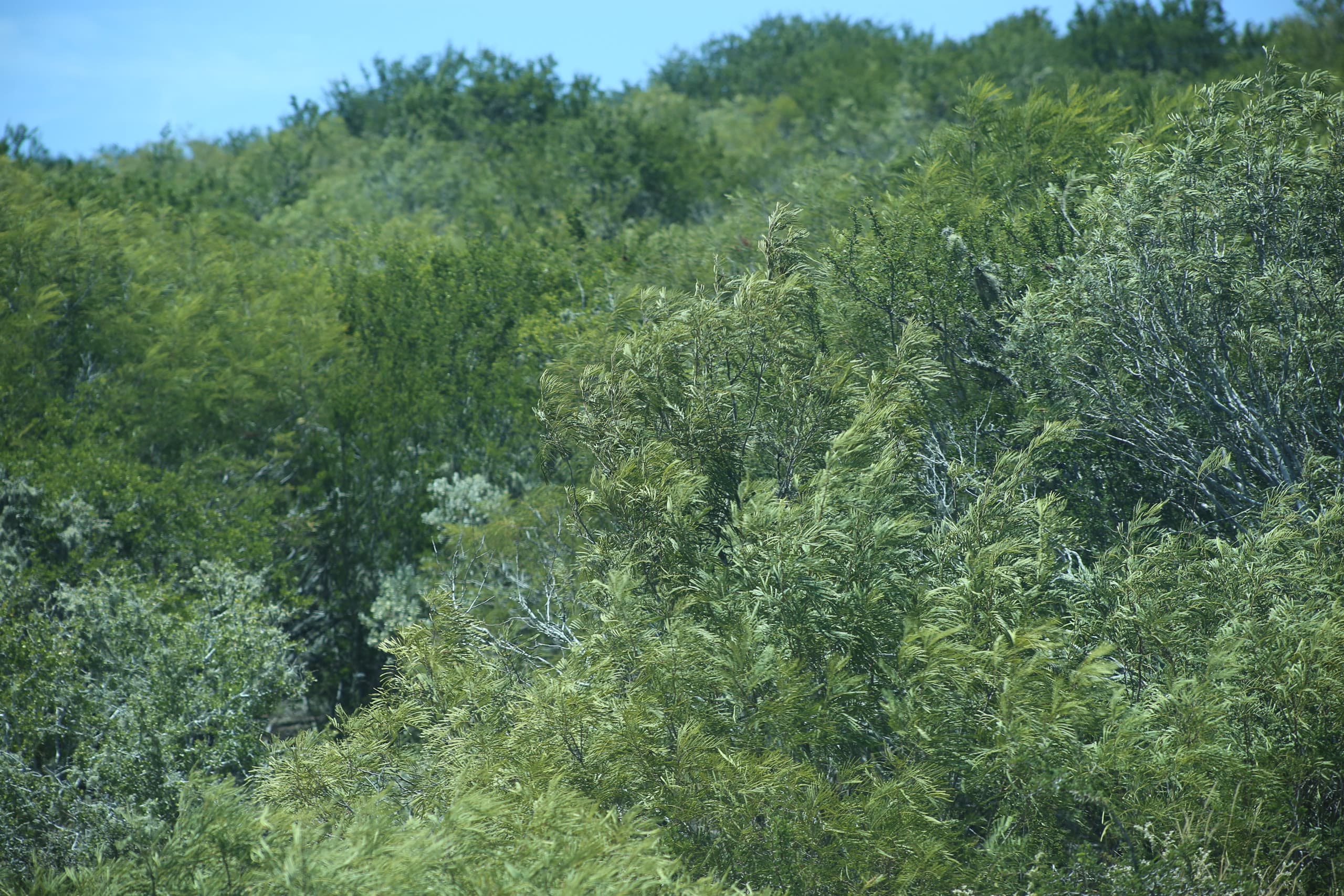
Around you is the Rio Grande Plains, the thornscrub that begins west of the coastal prairie and keeps going to the river. Mesquite, prickly pear, granjeno, caliche two-tracks pale as old bone. Summer heat is honest out here and you learn to plan early or late. This stretch of Texas built its name among wingshooters on quail and dove, and whitetail raised in thorn this thick grow up cautious, which is exactly what makes hunting them interesting.
Tortuga is one of the older oilfield ranches in this region, and some of the wells scattered over the larger ranch have been producing for a hundred years and better. That history shows up in practical ways. The roads on a ranch like this got built because somebody needed to get a truck somewhere in the rain, and they tend to be laid out sensibly as a result.
Every tract was surveyed before it was offered, so your boundary is a matter of record, and the right to use the ranch roads is written into the deed rather than left to a handshake. Restrictions are light. A pipeline easement crosses the tract near the southwest corner, common enough in this part of Texas, shown on the survey and set out in the closing paperwork you'll review. If you want to know how the taxes sit today, and what an agricultural or wildlife valuation would ask of you to maintain, ask us and you'll get the straight answer. We carry the note ourselves, and as little as 5% down starts it.
February and March are the months to see it, before the heat sets in and while the thorn is easy to read. Wear sleeves and boots you don't mind scuffing. Plan on being out there late in the day so you can stand at the east edge and watch the hills take the sun off the tract, then give the north wire and that new west corner as much time as you want. Call and we'll set the afternoon.
Where Lot 229 sits
Similar lots
Lot 229 — common questions
- Is Lot 229 at Tortuga Ranch still available?
- Yes — Lot 229 is listed and openly available at $135,814. Inventory moves; booking an appointment or calling (830)-307-7533 is the fastest way to hold your place.
- Can I buy Lot 229 at Tortuga Ranch with owner financing?
- Ask us — Guadalupe Ranch Co. is the owner-seller and finances most tracts in-house with low down payments and no bank qualifying. Call (830)-307-7533 for this lot's options.
- How big is Lot 229 at Tortuga Ranch and where is it?
- Lot 229 is 27.19 acres at Tortuga Ranch in DUVAL County, Texas. It's surveyed with deeded access on graded ranch roads.
- Can I walk Lot 229 at Tortuga Ranch before buying?
- Yes — book an appointment right from this page (takes about a minute) or call (830)-307-7533. A guide who knows the ranch will meet you at the gate and walk the corners with you.