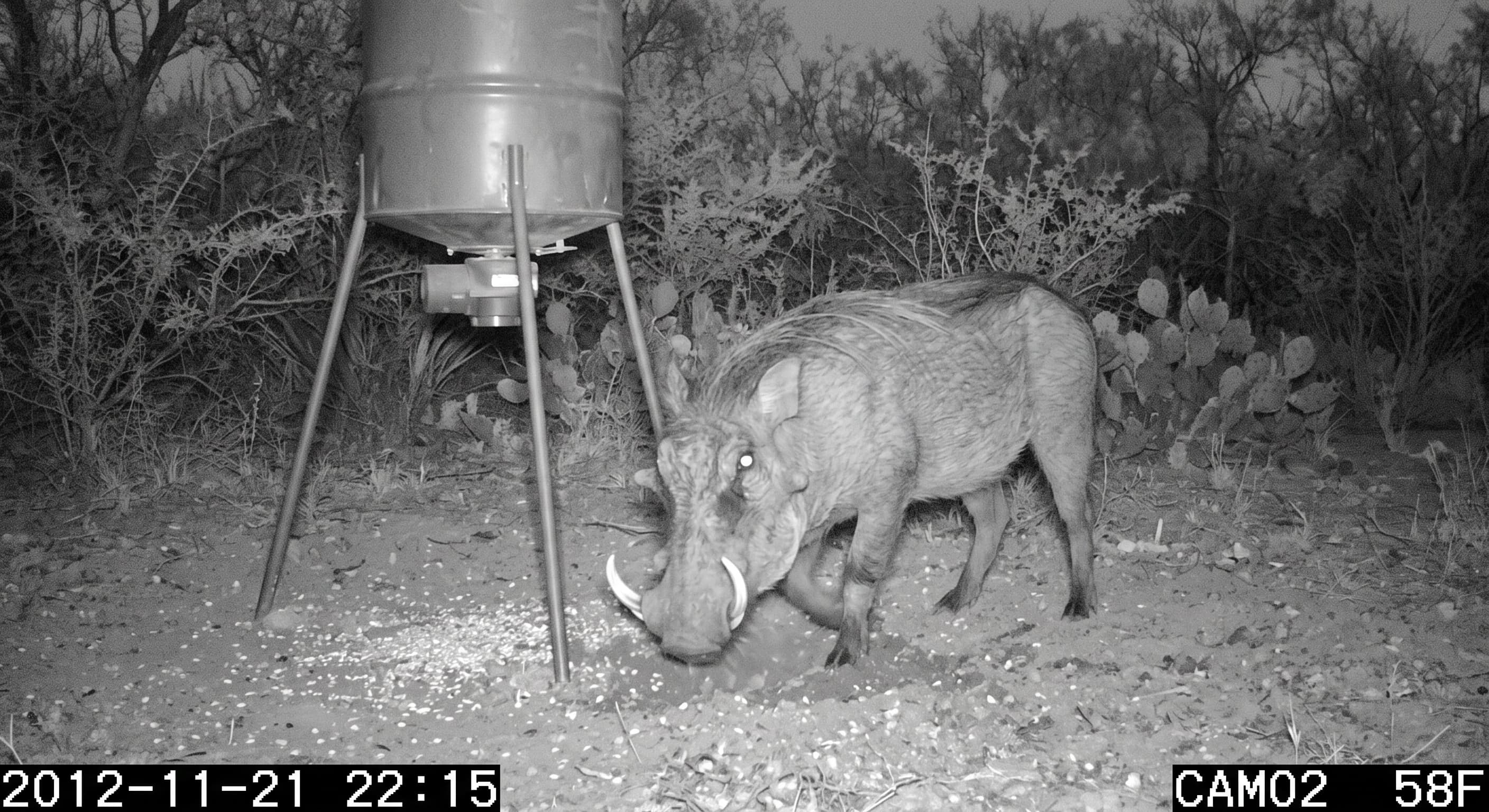
In September 2014, a Texas Parks and Wildlife crew flying a routine deer survey over the Chaparral Wildlife Management Area, 15,200 acres of state-owned brush on the La Salle and Dimmit county line, looked down and saw an animal that had no business being in the Western Hemisphere. Big boar, gray hide, tusks curling up past a face only taxonomy could love.
A common warthog. The African original, the real thing, rooting through the mesquite and prickly pear south of Cotulla like it had always been there.
In the years since, warthogs have turned up across a handful of South Texas counties: La Salle, Dimmit, McMullen, Zavala, with sightings drifting into Duval. Game cameras at the Chaparral caught a sow trailing 4 piglets. Staff trapped a nursing female. They are not just escaping out here. They are breeding.
"If they are reproducing here," the Chaparral's manager, Stephen Lange, told reporters, "they're reproducing in other areas, too."
There is no warthog census, and nobody who counts animals for a living believes there is a warthog boom. The biggest group anyone has reported is 6. The state's big game program leader has said flatly that hunters need not worry about overharvesting them because warthogs are rarely seen, even in the counties where they live. The evidence for an "explosion" of warthogs specifically amounts to scattered sightings and a few trapped animals. A population with piglets in it does not usually get smaller. They also cannot handle hard freezes, which should keep them penned in the brush country by the weather.
The warthog is the newest and strangest recruit to a much bigger story that is genuinely exploding, and has been for 90 years: Texas ranches fill up with animals from other continents, fences do what fences do, and the country downstream of every escape slowly turns into the world's most improbable savanna.
 How they get out explains the rest of the story. Texas holds somewhere between a couple hundred thousand and 2 million exotic hoofstock animals, depending on whether you believe the last official state census, taken in 1996, or the industry's own current claims. They are legally livestock, private property like cattle, which is why a scimitar-horned oryx can be worth thousands of dollars behind a high fence. And high fences fail. Floods drop trees across them, droughts push animals through them, and one February ice storm in 2021 did an estimated $250 million in damage to the industry, with one rancher reporting the loss of most of his axis herd. What survives a fence failure walks off and starts a population.
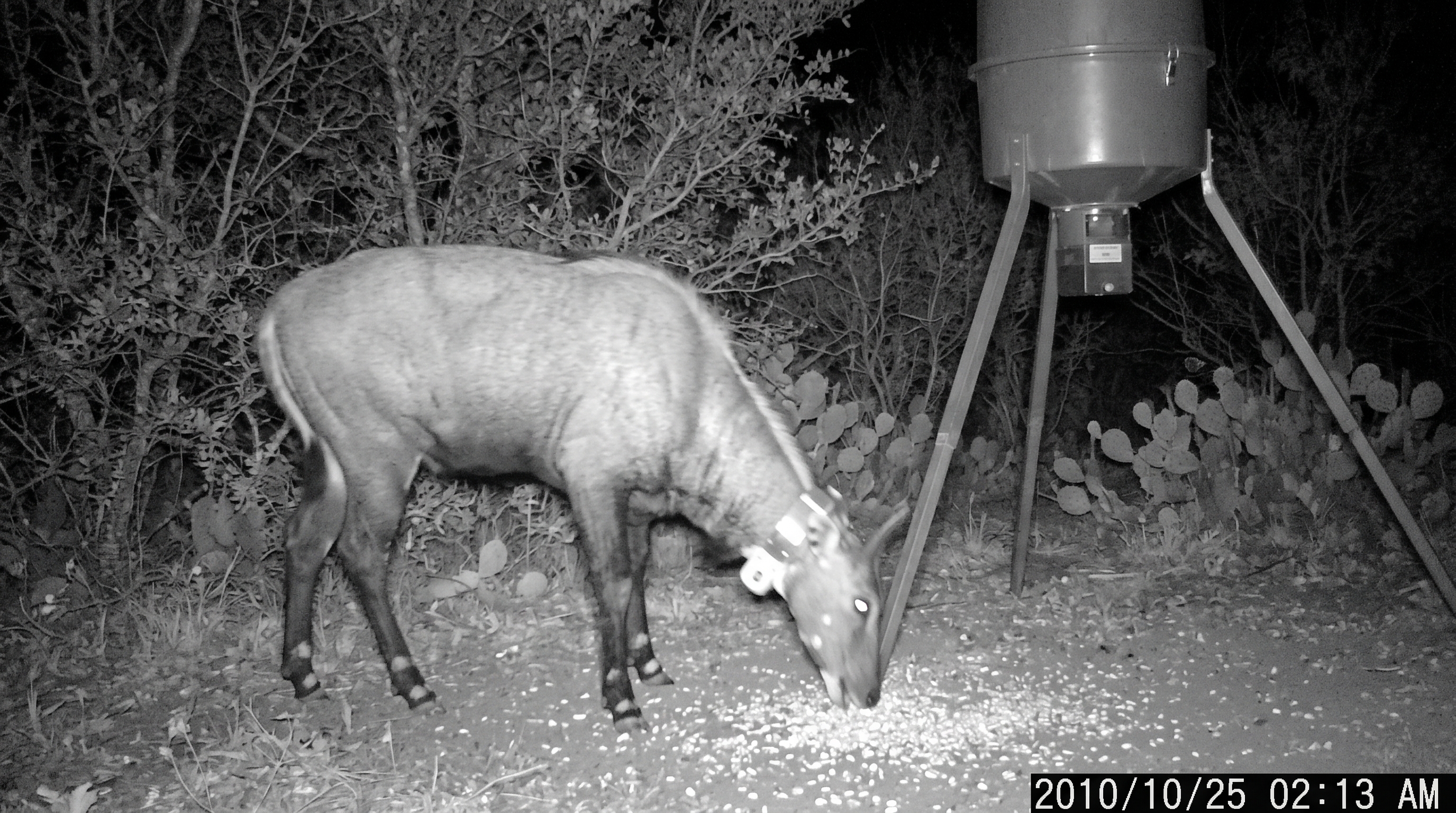
The oldest case study has been walking around South Texas since before the fences were tall. Starting around 1930, the King Ranch released nilgai antelope, blue-gray Indian giants that can push 600 pounds, on its Norias Division, 12 animals in the first batch with more to follow over the next decade. By the mid-1950s there were 200. By 1983, about 4,500. The best current estimates run around 38,000, ranging across Kenedy and Willacy counties and beyond, and the various published counts disagree by tens of thousands, which tells you something about how countable they are.
Nilgai are also the clearest case of an exotic becoming a genuine land problem, because they carry cattle fever ticks, the parasite that vectors bovine babesiosis, a disease so feared that the United States has maintained a permanent quarantine zone along the Rio Grande since 1938 and still employs mounted inspectors, the tick riders, to patrol it. Wildlife cannot be quarantined. A GPS-collar study published by the Caesar Kleberg Wildlife Research Institute logged some 216,000 nilgai locations in a single year and reported one female traveling 112 miles, which is a long way to carry a tick. Nilgai shoulder through cattle fences rather than jumping them, opening gaps as they go, and researchers found those same gaps being used by 14 other species, including ocelots.
If any animal in Texas has earned the word explosion, it is the aoudad. The state itself turned the North African sheep loose in the Panhandle canyon country in a series of releases in 1957 and 1958, roughly 86 animals in all, back when stocking exotics on public land seemed like a fine idea. A 2025 survey put the statewide population at more than 20,000; other estimates put the number west of the Pecos alone several times higher. The honest answer is that nobody's counts agree.
What is not in dispute is what aoudad do to the state's marquee wildlife restoration project. Desert bighorn sheep, wiped out of Texas by the 1960s and painstakingly restored, have been collapsing again from pneumonia. A study published this July in Scientific Reports, by Texas A&M, Kansas State and state wildlife researchers, found that 80 percent of bighorn exposed to aoudad carrying the pathogen Mycoplasma ovipneumoniae died of pneumonia, and that among 351 free-ranging aoudad sampled, more than half showed evidence of exposure. The lead author's summary was not gentle: every aoudad on the landscape should conservatively be considered a risk to bighorn sheep. Aoudad ewes commonly twin and can breed twice a year, biologists note; bighorn ewes raise 1 lamb. That is not a fight; it is arithmetic.
The state has started treating it that way. Since September 2025, state law has allowed landowners west of the Pecos to manage aoudad from helicopters under state permit, alongside feral hogs and coyotes. When Texas puts an animal in the same legal sentence as the feral hog, the animal has made an impression.
The brush country has been auditioning immigrant animals for a century, and it has never once returned the deposit.
And the Hill Country's own signature exotic, the axis deer, may be the biggest unknown of all. The last rigorous statewide study, in 1994, found roughly 52,000 between the pastures and the free ranges. The industry association now claims up to 125,000; other published figures run past 150,000. In parts of Kerr, Real and Bandera counties, axis are widely said to outnumber whitetail. Nobody has counted in more than 30 years. The spotted deer eating your oat patch is, statistically speaking, a rumor.
The strangest part is this: the same animal is a treasure on one side of a fence and a nuisance on the other.
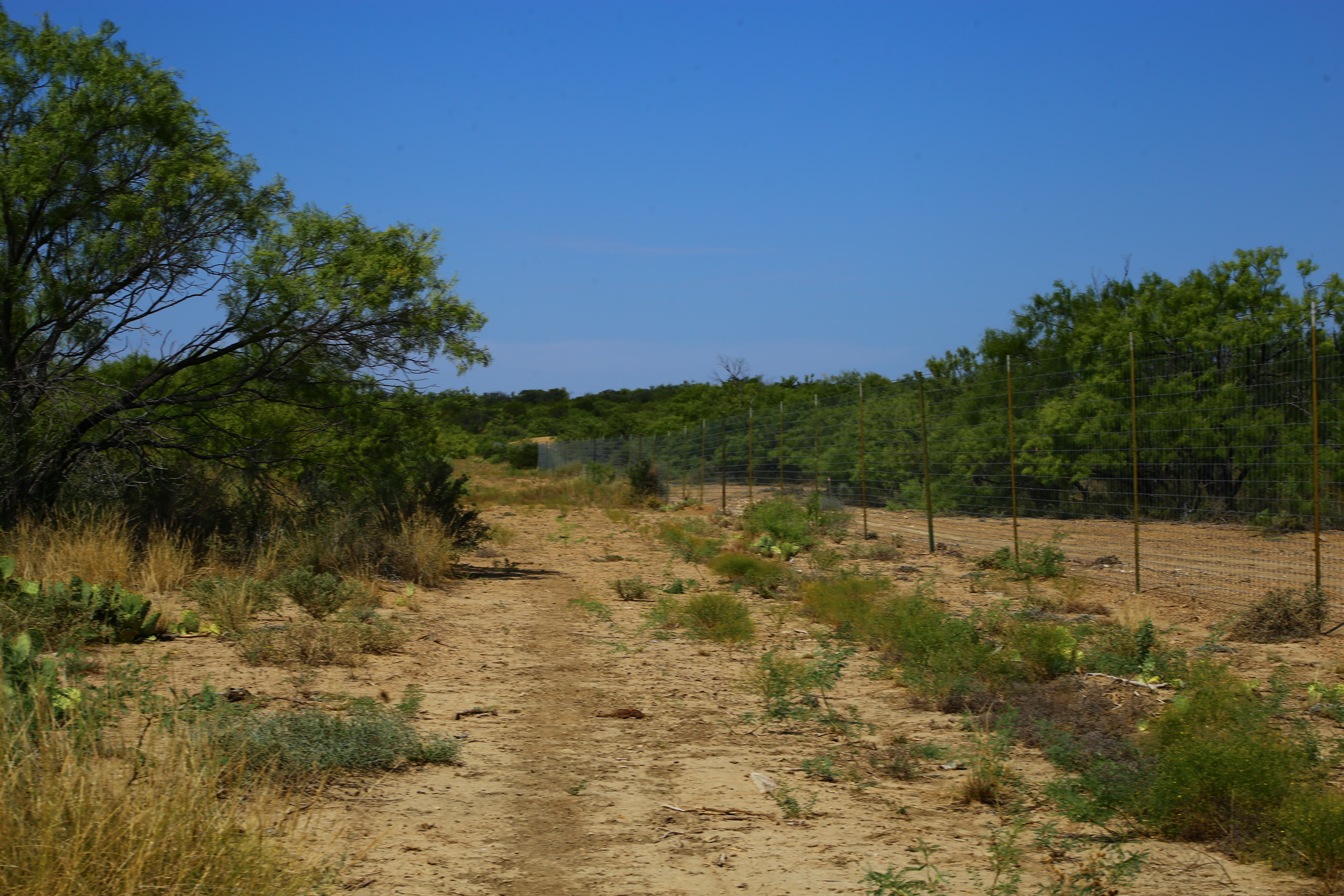 Inside the high fence, an axis buck is a $5,000 hunt, an addax is an $8,000 hunt, and the industry that sells them claims billions in annual economic impact, numbers worth repeating with the caveat that the industry is the one doing the counting. Outside the fence, that same axis herd is eating the browse your whitetail lease depends on. The state's own research found that inside shared enclosures, exotics can eliminate whitetail deer outright over 8 or 9 years, because axis and sika can fall back on grass when the good forage is gone and whitetail cannot.
A state wildlife biologist, Mitch Lockwood, put the management advice bluntly in the department's own magazine: if what a landowner mainly cares about is white-tailed deer, get rid of the exotics entirely. The industry's patriarchs answer with their own creed, that value is what keeps these animals on the earth at all. Both sides are describing the same fence from different pastures.
For the landowner in the middle, the law is at least simple. Exotics are private property; on your own land, with a hunting license, there is no season, no bag limit and no closed hour on them. If they carry ticks out of the quarantine zone, the federal government would like a word, and moving animals or carcasses out of tick country requires inspection. Otherwise, the free-ranging exotic is the rare Texas wildlife problem the state trusts you to solve yourself, mostly because it never considered the animal wildlife in the first place.
The warthog, for now, is a curiosity at the edge of all this, a few dozen sightings and a couple of confirmed litters in the brush between Cotulla and Carrizo Springs. Maybe the freezes hold it there. Maybe in 40 years some survey crew will fly a helicopter over La Salle County and count them by the hundred, the way their predecessors once looked down and were surprised by nilgai. The brush country has been auditioning immigrant animals for a century, and it has never once returned the deposit. In Texas, the fence is a suggestion, the exotic is a business, and the land, as always, gets the final vote on what stays.
Reporting drawn from Texas Parks and Wildlife Department publications and statements, the Caesar Kleberg Wildlife Research Institute, the Texas Animal Health Commission and USDA cattle fever tick program, a July 2026 study in Scientific Reports, the Texas State Historical Association, Texas A&M AgriLife, and coverage in the Texas Observer, Outdoor Life, MeatEater, the Wilson County News, the Victoria Advocate and Texas Monthly. Population figures for free-ranging exotics are estimates, several are disputed, and the article says so where they are.